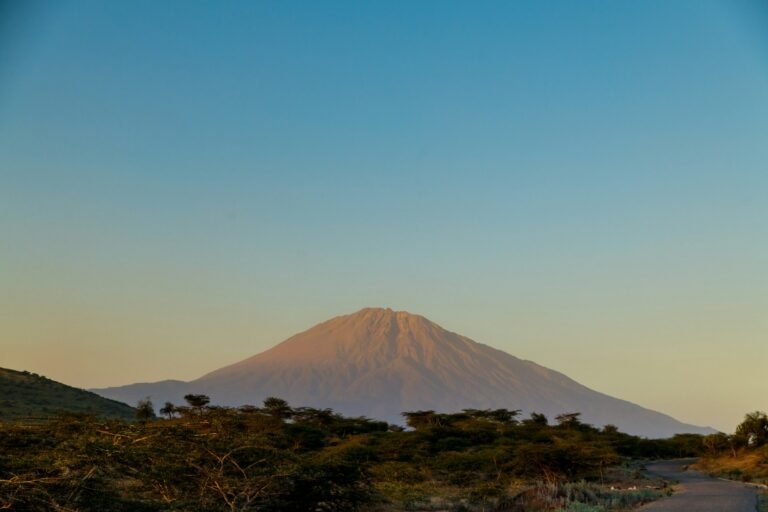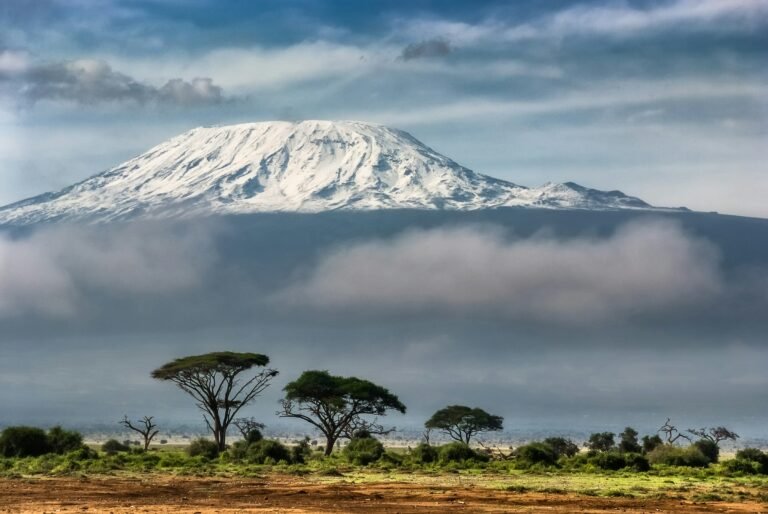
On Kilimanjaro or Mount Meru you walk from warm rainforest to freezing high desert in a few days, so what you pack matters. The good news is that you only carry a daypack. Your porters carry your main bag, the tents, the food and the cooking gear. This list covers what you need to bring yourself. If something is missing, ask your specialist before you travel: gear can often be hired in Moshi or Arusha.
How to pack
Use a soft duffel bag of about 70 to 90 litres for the porters, not a hard suitcase, and keep it within the weight limit your specialist gives you. Line it with a strong plastic or dry bag so everything stays dry in the rain. Anything you do not need on the mountain, such as city clothes, can stay at the hotel.
Clothing: think in layers
Layering lets you add or remove warmth as the temperature changes through the day.
- Base layers: two or three moisture-wicking tops and thermal leggings. Avoid cotton, which stays wet.
- Mid layers: a fleece jacket and a second warm layer such as a light down or synthetic jacket.
- Warm jacket: a thick down or synthetic jacket for evenings and summit night.
- Waterproof jacket and waterproof trousers: breathable, with a hood.
- Trekking trousers: two pairs, lightweight and quick-drying. Zip-off trousers are handy in the forest.
- T-shirts: two or three quick-drying ones for the lower slopes.
- Warm hat, sun hat or cap, and a neck gaiter or buff.
- Gloves: a thin pair for walking and thick insulated gloves or mittens for summit night.
- Socks: four or five pairs of wool or synthetic hiking socks, plus a warm pair for sleeping.
- Underwear: quick-drying.
Footwear
- Waterproof hiking boots with good ankle support, already well worn in. Do not bring new boots.
- Camp shoes or light trainers to wear in the evenings.
- Gaiters, which keep mud out on the lower trail and scree out on the descent.
Sleeping
- A four-season sleeping bag, comfortable to about minus 10 °C. Nights at the high camps are well below freezing.
- A sleeping bag liner adds warmth and keeps the bag clean.
- A small inflatable pillow, if you like one.
Sleeping mats are provided on our climbs. Ask your specialist whether you need to bring or hire a sleeping bag.
Daypack and water
- A daypack of 25 to 35 litres with a waist belt and a rain cover.
- Water bottles or a hydration bladder holding at least three litres. On summit night, insulate bladder tubes or use bottles, as tubes can freeze.
- Snacks you enjoy: energy bars, nuts, dried fruit or sweets. Appetite drops at altitude, and familiar food helps.
Useful equipment
- Trekking poles, especially for the descent.
- A headtorch with spare batteries. Summit night starts around midnight.
- Sunglasses with good UV protection. The glare off snow is strong.
- A power bank, kept warm in your sleeping bag at night.
- A few dry bags or zip-lock bags for electronics and documents.
- A small towel and wet wipes, as washing water is limited on the mountain.
Health and personal care
- Sunscreen with a high SPF and lip balm with sun protection.
- Your personal medicines, plus painkillers, blister plasters and rehydration sachets.
- Hand sanitiser and toilet paper.
- If you plan to take medicine for altitude, such as acetazolamide (Diamox), discuss it with your doctor before you travel.
Our guides carry a first aid kit, but bring what you personally need.
Documents and money
- Passport, visa and a copy of your travel insurance, which must cover trekking to the altitude of your mountain.
- Some cash in small notes for tips and personal spending.
Pro tips from our guides
- Wear your boots and carry your daypack on long walks before the trip.
- Keep your waterproof jacket at the top of your daypack every day, even when the sky is clear.
- Put tomorrow's clothes inside your sleeping bag so they are warm in the morning.
- Pack light. Bring what is on this list and little else.
If you are unsure about any item, send your specialist a photo or a question before you fly. Your guide will also check your kit at the briefing the night before the climb, so there is time to sort out anything missing.