Mount Meru is Tanzania's second-highest mountain, at 4,562 metres, and it stands inside Arusha National Park, about an hour's drive from the town of Arusha. It is a steep, spectacular climb, with a walking safari at the start and a narrow crater rim at the top. Because the summit ridge is exposed, the weather matters even more on Meru than on many bigger mountains. Here is what to expect through the year.
The short answer
The best months to climb Mount Meru are:
- June to October, the long dry season.
- January and February, the short dry spell between the two rains.
We do not advise climbing in April and May, the heart of the long rains.
June to October: the main season
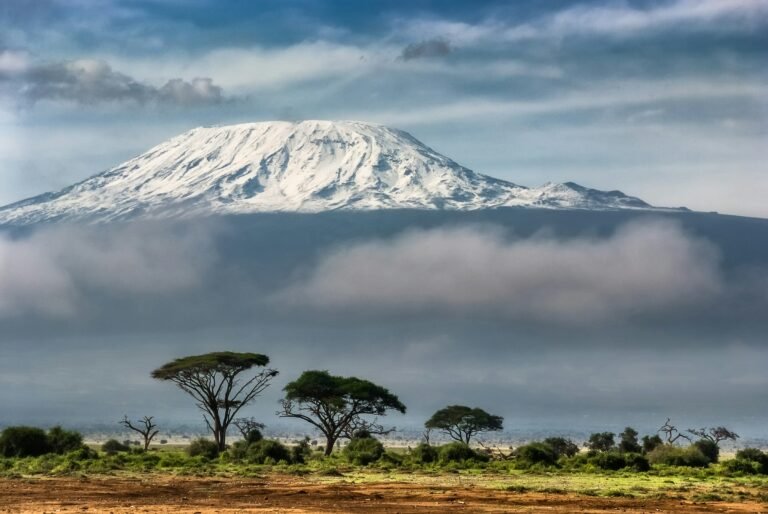
This is the most reliable time to climb. Skies are mostly clear, rain is rare, and the days are pleasant for walking, although the nights at Saddle Hut and on the summit ridge are cold. Visibility is usually excellent, which is what you want on Meru: from the crater rim at sunrise you look across to Kilimanjaro, down into the crater at the Ash Cone, and out over the plains of the park.
The dry months are also good for wildlife on the lower slopes. As water becomes scarcer, animals gather in the glades and near streams, and you have a good chance of seeing giraffe, buffalo, zebra and warthog on the first day, sometimes elephant too. This is also the busiest time on the mountain, so the huts are fuller, but Meru never feels crowded in the way Kilimanjaro can.
January and February: a quieter window
These months are warm and mostly dry, with occasional short showers. Mornings are often beautifully clear, which suits the pre-dawn summit climb and sunrise on the ridge. There are fewer climbers than in the middle of the year, and the park is green. It is also a good time to combine Meru with a safari in the northern parks.
November and December: the short rains
The short rains bring intermittent showers, often in the afternoon. The forest trail can be muddy and slippery, and cloud may hide the views later in the day. Mornings are frequently clear, and because the summit attempt starts around midnight, you can still have a fine sunrise. The vegetation is lush and animals are active. Climbing is possible, but pack good waterproofs and be ready for some wet walking.
March to May: the long rains
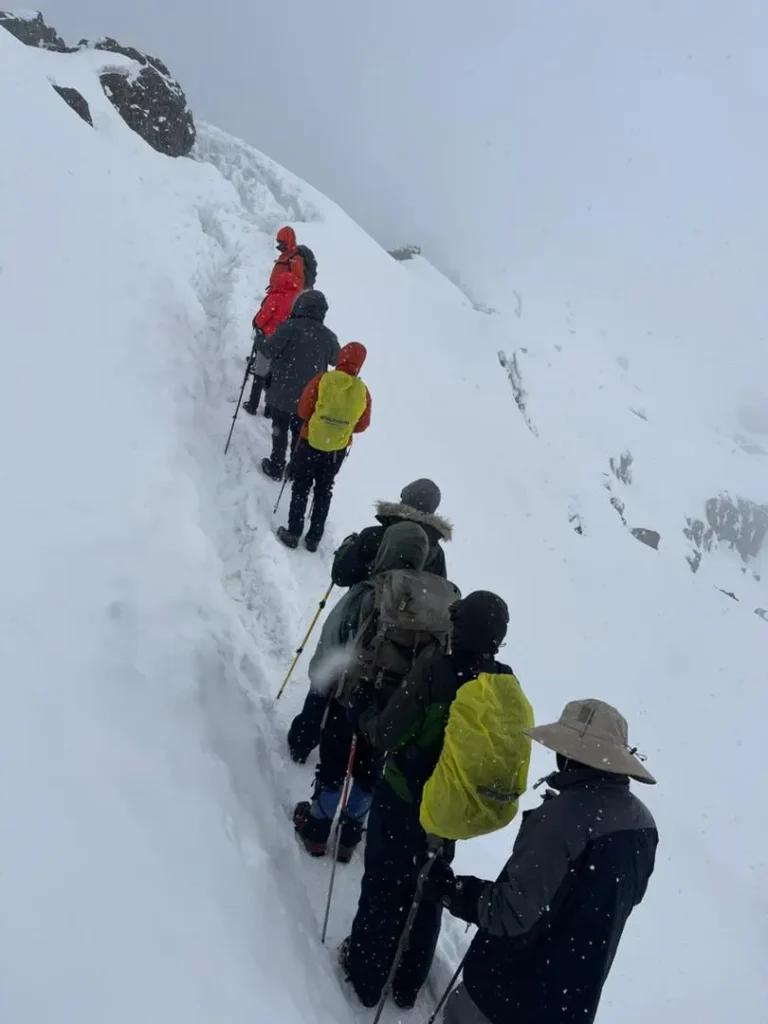
This is the wettest time of year. Rain is heavy and frequent, trails turn to mud, and dense cloud often covers the upper mountain. On the summit ridge, wet or icy rock makes the unprotected scrambling sections dangerous, and in heavy rain, ice or thick fog the park ranger can call off the summit attempt. For those reasons we do not recommend climbing Meru in April and May. March can be acceptable early in the month, but the chance of rain rises quickly.
Other things to think about
Meru as a warm-up for Kilimanjaro
Many climbers use Meru to acclimatise before Kilimanjaro. If that is your plan, choose a dry-season date that works for both mountains, and leave a rest day between them. Four days on Meru gives more time at altitude than three, and is gentler on your legs for the climb that follows.
Temperatures
Down at Momella Gate, around 1,500 metres, days are warm. At Saddle Hut, 3,570 metres, nights can drop close to freezing, and on the summit ridge before sunrise it can be well below. Pack a warm jacket, hat and gloves whatever the month.
The trail itself
The standard way up Meru is the Momella route, which starts at Momella Gate on the eastern side of the mountain. An armed park ranger walks with every group because of the buffalo and elephant in the forest. The final ridge from Rhino Point over Cobra Point to Socialist Peak is steep in places, and dry rock makes it far safer and more enjoyable.
Planning your climb
Pick June to October for the most settled weather, or January and February for a quieter, greener mountain. If your dates fall in the short rains, Meru is still a good climb with the right gear. Tell your specialist when you would like to travel, and we will suggest the right number of days and how to fit Meru around Kilimanjaro or a safari.