Kilimanjaro sits just south of the equator, so it has no summer and winter in the European sense. Instead, the year turns on two dry seasons and two rainy seasons. You can climb in any month, and we do, but the weather has a real effect on your comfort, your safety and your chance of standing on Uhuru Peak. This guide explains what each part of the year is like on the mountain, so you can choose the dates that suit you.
The short answer
The best conditions are in the two dry seasons:
- Late June to the end of October: dry, clear and cold at night.
- Late December or early January to mid-March: a little warmer, mostly dry, with occasional short showers.
These are also the busiest months, especially on the Machame and Marangu routes. If you want quieter trails in the dry season, choose Lemosho, Rongai or the Northern Circuit.
Why the weather matters so much
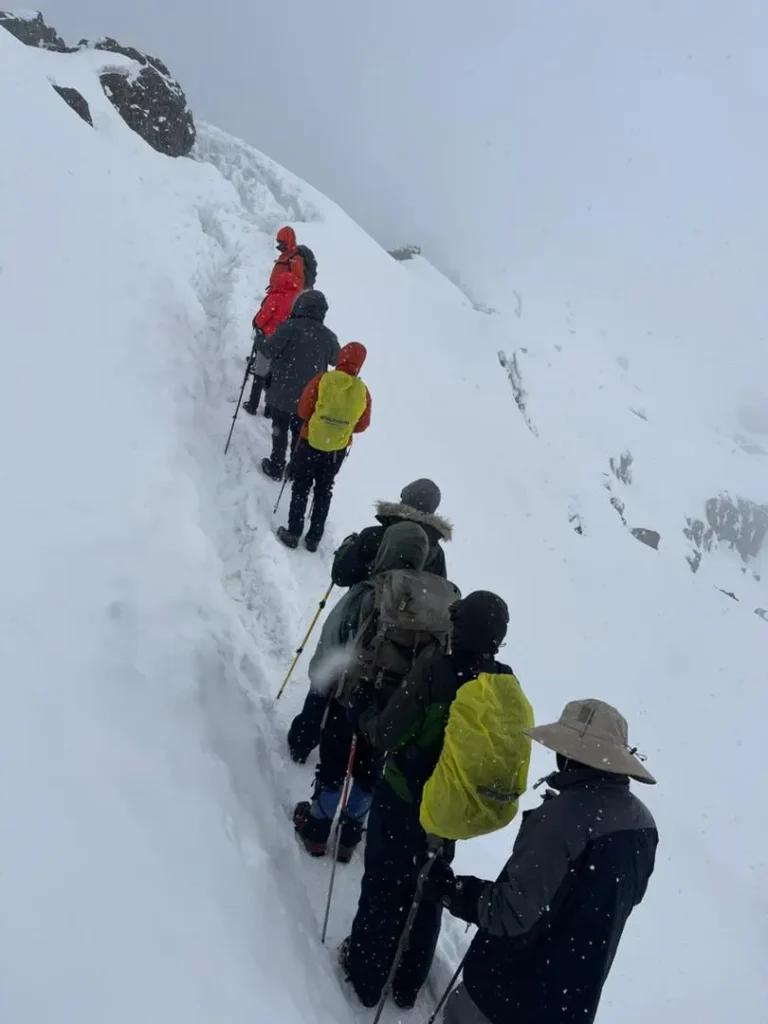
Summit success on Kilimanjaro depends mostly on acclimatisation, but weather comes a close second. Rain, mud, snow and wind all drain energy that you need for summit night. Wet gear is hard to dry at altitude, and cold, damp climbers sleep badly. Clear weather also makes the paths safer, especially on the scree above the high camps and on the descent.
Month by month
January to mid-March
This is one of the best times to climb. The days are mostly dry and bright, with clear mornings and evenings, and it is warmer than in the middle of the year. Clouds can build in the afternoon, and a brief shower is possible, but it rarely lasts. Towards the end of March the chance of rain rises as the long rains approach.
Late March to May
The long rains. It rains most days on the lower slopes, often heavily, and cloud can hide the views for days at a time. Higher up, rain can fall as snow. Some operators stop running climbs in April and May. We still climb in this season for experienced hikers who accept the conditions, and the reward is an almost empty mountain. If you do choose these months, pick the Rongai route or the Northern Circuit, as the northern side of the mountain is noticeably drier.
June to August
The rain eases off during June, and the mountain becomes dry and clear, but the nights are at their coldest, especially on summit night. June is a lovely month, with good weather and few other climbers. From July the numbers grow, and by August the popular routes are busy.
August to October
Peak season. There are many clear days and it is a little warmer than in June and July. Cloud can sit over the forest and moorland, and on the southern routes you may get wet on the first day or two, but once you are above the forest the conditions are usually excellent. The good weather tends to last until about mid-October.
Late October and November
The short rains. From late October the weather becomes less settled, with afternoon cloud and occasional thunderstorms, and the number of climbers drops. November brings more regular rain, which lasts into early December. Mornings are often clear, so most of the walking can be done before the weather turns. Fresh snow on the summit also makes for fine photographs.
December to early January
The weeks around Christmas and New Year are the second peak season. Many people use their holidays to climb, so the mountain is busy, even though showers and thick cloud are still possible on the lower slopes. If you want to climb at this time, book early and consider a quieter route.
Choosing a route to match the season
The northern side of Kilimanjaro lies in the rain shadow and gets less rain than the south. In the wetter months, Rongai and the Northern Circuit are the most sensible choices. In the busy dry seasons, Lemosho, Rongai and the Northern Circuit are much quieter than Machame and Marangu. Marangu has the advantage of huts rather than tents, which some climbers prefer when rain is likely.
Climbing by the full moon
Some climbers time their summit night for the full moon. On a clear night the glaciers shine in the moonlight, and you may barely need your headtorch on the final climb to the crater rim. The only downsides are that bright moonlight can make it harder to sleep and hides many of the stars. Your specialist can tell you the full-moon dates for your year.
A note on unpredictability
Mountain weather does not read calendars. The rains can arrive early or linger late, and you can have dry days in the rainy season and a storm in the dry season. Whatever month you choose, pack for rain and for cold, and trust your guide's judgement on the day.
Planning your climb
If you can travel in late June to October or January to mid-March, you will have the best odds of good weather. If your dates fall in a wetter month, we will suggest the route that gives you the best chance. Tell your specialist when you would like to go, and we will help you choose the right route and number of days.